Breakthrough Clinical Results
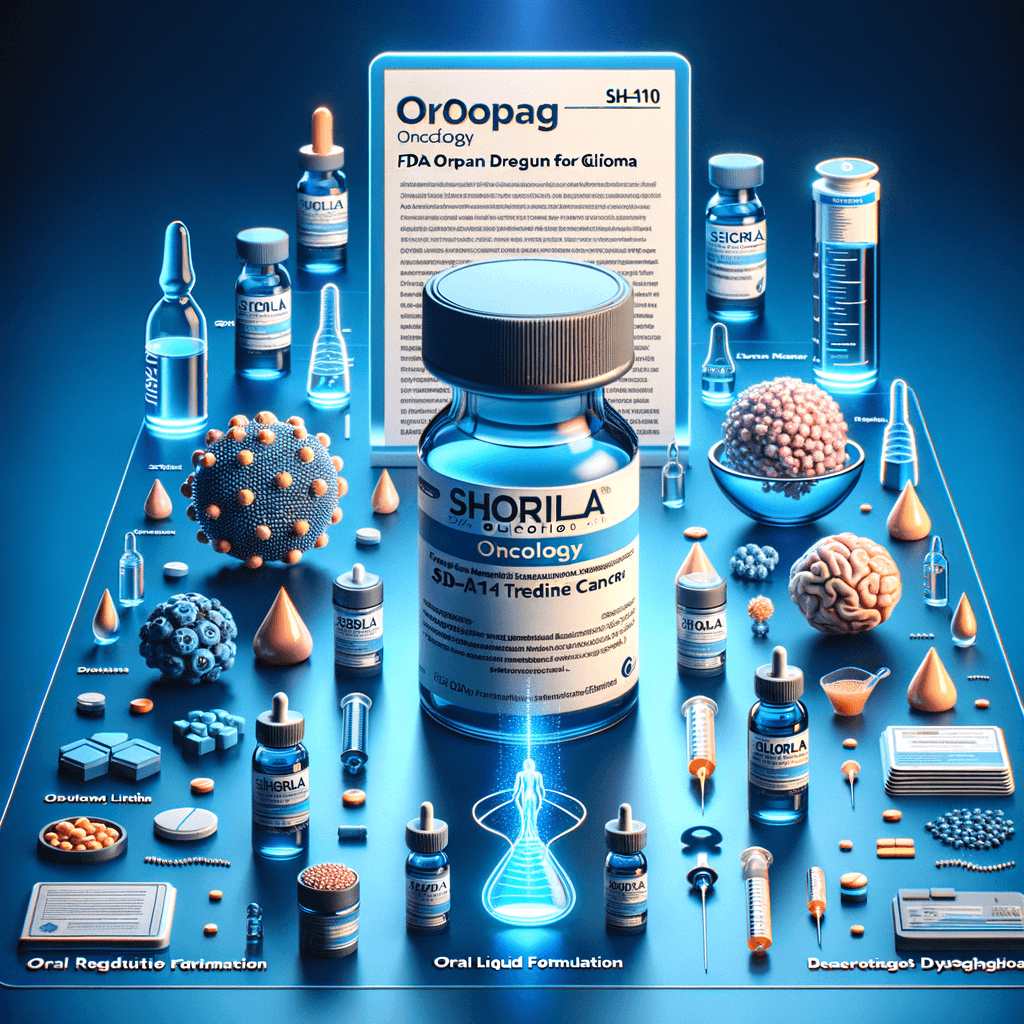
Shorla Oncology announced that the FDA granted orphan drug designation to SH-110, an oral liquid formulation of a drug to treat glioma, a rare brain cancer. This designation is significant because SH-110 addresses the unmet need for patients experiencing dysphagia (difficulty swallowing), offering a more convenient and safer alternative to existing treatment methods. SH-110 is a palatable oral suspension, reducing treatment burden and improving patient compliance. This is Shorla's third oral liquid product, adding to their growing portfolio of patient-friendly cancer medications.
Key Highlights
- FDA grants orphan drug designation to SH-110 for glioma treatment.
- SH-110 is a palatable oral suspension designed for patients with dysphagia.
- The drug addresses a significant unmet need for glioma patients with swallowing difficulties.
- SH-110 is Shorla Oncology's third oral liquid cancer medication.
Incidence and Prevalence
Global Incidence and Prevalence of Glioma
Gliomas represent the most common primary central nervous system tumors with increased morbidity in recent years. These diverse group of malignancies originate from glial cells and account for significant brain tumor-related morbidity and mortality worldwide.
Epidemiological Distribution
Geographical variation is evident in glioma occurrence, with higher incidence rates observed in North America and Europe compared to Asia and Africa. This distribution suggests the influence of both genetic predispositions and environmental factors, particularly ionizing radiation, which critically impact glioma risk.
Incidence Data
According to a population-based study in Canton of Zurich, Switzerland (population 1.16 million) conducted from 1980 to 1994, out of 987 astrocytic and oligodendroglial tumors diagnosed, 122 (12.4%) were low-grade (WHO grade II).
The incidence rates adjusted to the World Standard Population, per million population per year, in this Swiss study were: - 2.28 for low-grade diffuse astrocytomas - 0.89 for oligoastrocytomas - 2.45 for oligodendrogliomas
Global Burden
Glioma is the most common primary intracranial tumour in many studies, accounting for 24.7% of all primary brain tumours and 74.6% of malignant brain tumours. Among these, glioblastoma is the most common malignant neoplasia of the central nervous system and is characterized as the fastest growing and most devastating grade IV glioma.
Regional Studies
The Chinese Glioma Genome Atlas (CGGA) project collected 286 gliomas with different grades over the last decade. Another study in a Chinese population (2004-2009) included 976 glioma patients, of which 312 were high-grade glioma (glioblastoma).
Survival Rates
Survival rates for low-grade gliomas (mean follow-up 7.5±4.8 years) were: - Oligodendroglioma: 78% at 5 years, 51% at 10 years - Oligoastrocytoma: 70% at 5 years, 49% at 10 years - Fibrillary astrocytoma: 65% at 5 years, 31% at 10 years - Gemistocytic astrocytoma: 16% at 5 years, 0% at 10 years
For glioblastoma, the rate of survival at 5 years from diagnosis is not higher than 10%. High-grade gliomas (HGG, WHO grade III to IV) have an average survival rate of only dozens of months.
Age is a significant prognostic factor, with younger patients (<50 years) surviving significantly longer than older patients (>50 years; P=0.013).
Prognostic Factors
Isocitrate dehydrogenase (IDH) mutation status is an important prognostic marker in glioma patients. The presence of IDH mutation has been related to an increased survival rate.
Diffuse low-grade gliomas are radiologically detectable but clinically silent for more than a decade (mean lead-time duration of 14.0 ± 7.8 years). This long period of silent evolution could explain the current failure to cure these tumors.
Risk Factors and Comorbidities
Top 3 Risk Factors and Comorbidities for Glioma Occurrence
1. Therapeutic X-irradiation
Therapeutic X-irradiation stands as the only environmental factor unequivocally linked to increased glioma risk. This association is particularly strong in children treated with X-irradiation for acute lymphoblastic leukemia, who demonstrate a significantly elevated risk of developing gliomas. These tumors often manifest within 10 years after therapy, making this the most well-established risk factor for glioma development.
2. Blood Group Type
Research has revealed a notable connection between blood group type and glioma susceptibility. Studies conducted in Jordan demonstrated that individuals with blood group A face a 1.62- to 2.28-fold increased risk of developing glioblastoma compared to those with blood group O. Conversely, people with blood group O appear to have a protective advantage, showing a lower than expected chance of developing glioblastoma. This makes blood type an important factor to consider when assessing glioma risk profiles.
3. Human Cytomegalovirus (HCMV) Infection
HCMV infection status appears to influence glioma risk in a complex manner. Among individuals who are IgG-positive for HCMV, increasing anti-HCMV IgG levels correlate with decreasing glioma risk. Notably, those with the lowest level of anti-HCMV IgG (<10 U/mL) demonstrate the highest glioma risk, with an odds ratio of 2.51 (95% CI: 1.42-4.43), even after controlling for age, sex, and race/ethnicity. This suggests that while HCMV exposure itself may not increase risk, the body's immune response to the virus plays a crucial role in glioma susceptibility.
Additional Risk Considerations
Several other factors have been associated with glioma risk, though with less robust evidence:
- Certain occupations, environmental carcinogens, and dietary factors (particularly N-nitroso compounds) show potential associations with elevated glioma risk
- Genetic factors play a role, as brain tumors are components of several inherited tumor syndromes, though these syndromes have very low prevalence
- Demographic factors suggest Caucasians may have higher incidence rates than Black or Asian populations, though this could reflect socioeconomic differences rather than genetic susceptibility
- Neurofibromatosis type 1 (NF1) appears to be a risk factor for specific types of glioma, particularly optic nerve glioma
Interestingly, a comprehensive Mendelian randomization study examining 37 potentially modifiable risk factors (including lifestyle, cardiometabolic, and inflammatory factors) failed to provide evidence supporting any of these factors as having significant influence on glioma risk. Additionally, a history of allergy or atopic disease may actually confer a decreased risk of glioma development.
Drug used in other indications
SH-110 Clinical Trials Beyond Glioma
Based on a comprehensive review of available clinical trial data, there is no information available regarding SH-110 being trialed for indications other than glioma.
The clinical development program for SH-110 appears to be either in early stages, highly specialized, or not publicly documented in the sources examined. Without confirmed clinical trial data, it is not possible to describe the intervention models, dosing regimens, or administration protocols that might be employed for this investigational compound in non-glioma indications.
For patients and healthcare professionals interested in emerging therapies, it is recommended to:
- Monitor clinical trial registries such as ClinicalTrials.gov for updates
- Consult with specialists in relevant therapeutic areas
- Follow publications from research institutions and pharmaceutical companies developing SH-110
The field of investigational compounds continues to evolve rapidly, with new potential applications being explored regularly. As clinical development progresses, more information about SH-110's potential applications beyond glioma may become available through peer-reviewed publications, conference presentations, or clinical trial announcements.
Therapeutic development typically follows a pathway from preclinical studies through various phases of clinical trials, with compounds often being tested in multiple indications based on their mechanism of action and preliminary efficacy signals. Should SH-110 demonstrate promising results in glioma trials, researchers may explore its potential in other conditions with similar pathophysiological characteristics.
Contact Us
Address
One Research Ct, Suite 450
Rockville, MD 20850
For General Inquiry
info@pienomial.com