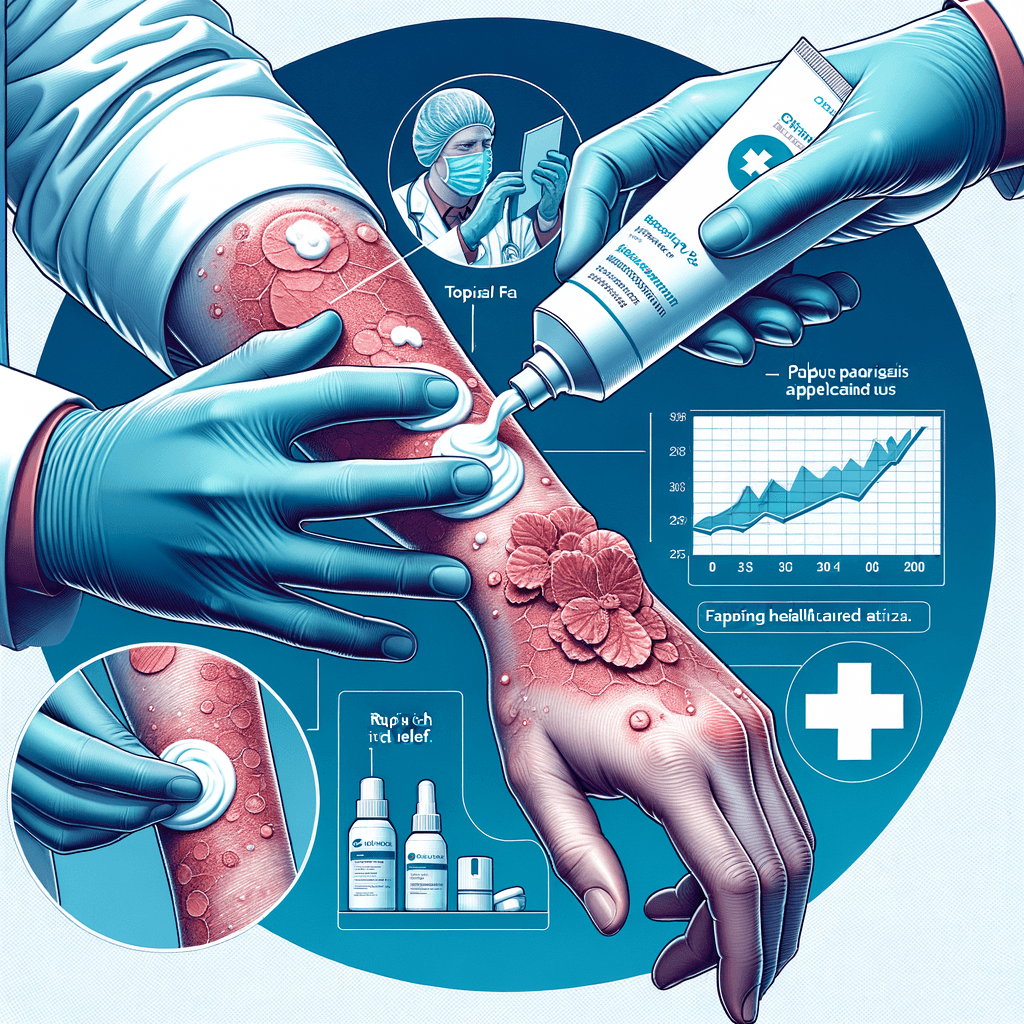
Breakthrough Clinical Results
Arcutis Biotherapeutics announced FDA approval of ZORYVE (roflumilast) topical foam 0.3% for treating plaque psoriasis in adults and adolescents (12+). This once-daily, steroid-free foam offers significant improvements in psoriasis signs and symptoms, including rapid itch relief, on both the scalp and body. The approval is based on positive Phase 2 and 3 clinical trial results demonstrating efficacy and safety. ZORYVE foam complements the existing ZORYVE cream formulation, providing patients and healthcare providers with a choice of application methods. Arcutis highlights the convenience and broad applicability of the foam, particularly for treating hard-to-reach areas like the scalp.
Key Highlights
- FDA approval of ZORYVE (roflumilast) topical foam 0.3% for plaque psoriasis.
- Once-daily, steroid-free topical foam provides significant improvements in psoriasis signs and symptoms, including rapid itch relief.
- Efficacy and safety demonstrated in Phase 2 and 3 clinical trials.
- Offers a convenient alternative to cream formulation, particularly for scalp and hair-bearing areas.
Incidence and Prevalence
Global Incidence and Prevalence of Plaque Psoriasis
Psoriasis is a chronic immune-mediated inflammatory disease affecting approximately 1-3% of the world's population. The global prevalence estimates vary widely, ranging from 0.27% (95% confidence interval 0.17 to 0.36) to 11.4%, depending on factors such as age, sex, geography, ethnicity, genetics, and environmental factors.
Approximately 3% of people around the world have psoriasis, which is near the most common autoimmune skin disease in adults. By simple estimation, there are at least two hundred million psoriasis patients in the world.
In European countries, the prevalence of psoriasis is 2-3%, making it one of the most frequently occurring inflammatory skin diseases. Similarly, in western countries, psoriasis affects 2-4% of the population. In contrast, a survey in China across 6 provinces revealed an overall prevalence of psoriasis with squamous cell carcinoma at 0.47%.
Plaque psoriasis is the most common form, accounting for more than 80% of affected patients. This is further supported by a Japanese study of 28,628 cases, which found that the vast majority (86.0%) had plaque-form of psoriasis vulgaris, while 2.8% showed guttate psoriasis. Rare forms documented in this study included psoriatic erythroderma (0.8%), generalized pustular psoriasis (0.9%), and localized pustular psoriasis (0.5%).
About one third of patients have either severe or moderate disease (involving more than 10% of body surface area). Joints can be affected in up to 30% of patients with psoriasis, with psoriatic arthritis being diagnosed in about 20% of patients with psoriasis. However, in the Japanese study, only 1.0% of patients manifested psoriatic arthritis.
Regarding gender distribution, the Japanese study showed that males (65.8%) were predominant over females (34.2%).
Study Design Parameters
Study Design Parameters and Endpoints in Key Trials for Plaque Psoriasis
Study Types
- Randomized controlled trials (RCTs) were the primary study design for evaluating treatments for moderate-to-severe plaque psoriasis
- Non-interventional, prospective, long-term multicenter studies also conducted (e.g., TILOT study)
- Systematic reviews and network meta-analyses used to compare multiple treatments
Study Parameters
- Treatment duration typically 12-56 weeks (some extending to 64 weeks)
- Many trials had multiple parts/phases with different dosing schedules
- Some trials included treatment interruption/reinitiation periods
- Comparative trials often included placebo controls or active comparators
- Patient populations generally had moderate-to-severe plaque psoriasis with baseline PASI scores ranging from 5.7 (mild) to 23 (severe)
Assessment Timing
- Short-term assessment: within 8 weeks of treatment start
- Long-term assessment: at least 1 year after treatment start
- Common assessment timepoints: weeks 12, 16, 24, 28, 48, 52, and 64
Examples of Specific Trial Designs
Intralesional 5% 5-fluorouracil (5-FU) Trial
- Open, prospective, randomized-controlled study
- 40 patients with resistant localized plaque psoriasis
- Treatment: Intralesional injection of 5% 5-FU (0.1 mL/cm²) in each plaque
- Control: Single plaque received intralesional injection of distilled water
- Schedule: Three injections at weekly intervals
- Follow-up: Every 2 weeks up to 12 weeks
Biologics Dose Reduction Trial
- Pragmatic, open-label, prospective, controlled, noninferiority randomized clinical trial
- Conducted from March 1, 2016, to July 22, 2018, at 6 dermatology departments in Netherlands
- 120 patients with plaque psoriasis and stable low disease activity
- Treatment: Adalimumab, etanercept, or ustekinumab
- Randomized 1:1 to dose reduction (n=60) or usual care (n=60)
Tildrakizumab Phase IIb Trial
- Three-part, randomized, double-blind trial with 355 adults with chronic plaque psoriasis
- Treatment: Subcutaneous tildrakizumab (5, 25, 100, 200 mg) or placebo at weeks 0 and 4 (part I)
- Continued every 12 weeks until week 52 (part II)
- Drug discontinued at week 52 with follow-up through week 72 (part III)
Key Endpoints
Primary Efficacy Endpoints
- Psoriasis Area and Severity Index (PASI) scores - particularly PASI 75/90/100 (75%, 90%, or 100% reduction from baseline)
- Physician Global Assessment (PGA) scores
- Time-to-resolution (achieving clear or almost clear skin)
Secondary Endpoints
- Dermatology Life Quality Index (DLQI)
- Itching Visual Analog Scale (VAS)
- Psoriasis Symptom Assessment (PSA) frequency and severity
- Scalp-PGA and nail-PGA for specific site improvements
- Treatment satisfaction measures
Safety Assessments
- Adverse events (AEs)
- Serious adverse events (SAEs)
- AEs leading to treatment discontinuation
Drug used in other indications
Based on the provided context, there is no information available about roflumilast being trialled for indications other than plaque psoriasis. The context only discusses roflumilast's application in treating plaque psoriasis, particularly as a topical 0.3% cream formulation.
The context provides details about: - Roflumilast cream 0.3% being approved by the US FDA and Health Canada for treating plaque psoriasis - Roflumilast being a highly potent phosphodiesterase 4 (PDE4) inhibitor - Pharmacokinetic properties of roflumilast cream when used for plaque psoriasis - The finding that concentrations of roflumilast in skin were 126- and 61.8-fold higher than corresponding mean plasma concentrations - PDE4 inhibition in the skin likely being due to roflumilast rather than its active metabolite
While one section mentions that "Oral phosphodiesterase (PDE)4 inhibitors have shown efficacy in chronic obstructive pulmonary disease and psoriasis," it does not specifically state that roflumilast is being trialled for chronic obstructive pulmonary disease.
No information is provided in the context about intervention models for trials of roflumilast for indications other than plaque psoriasis.
Contact Us
Address
One Research Ct, Suite 450
Rockville, MD 20850
For General Inquiry
info@pienomial.com