Breakthrough Clinical Results
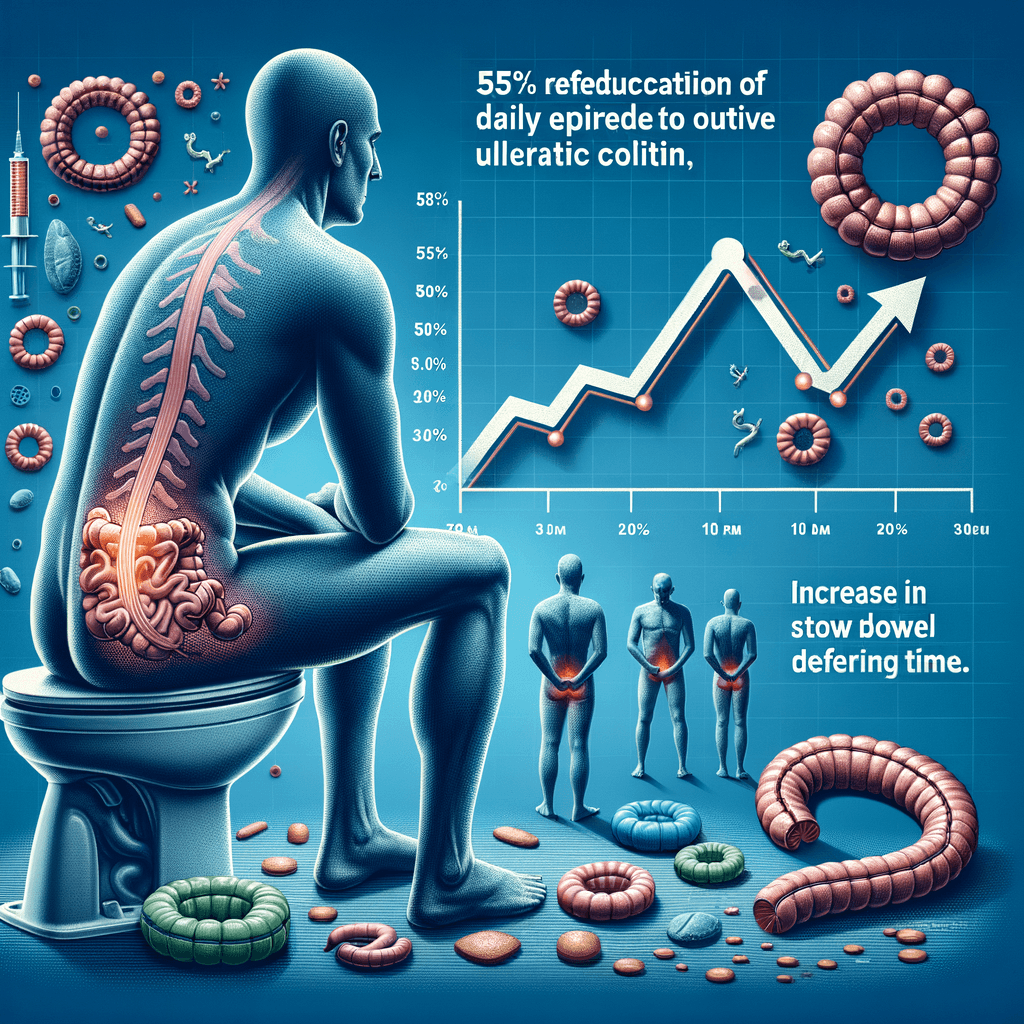
Eli Lilly and Company announced positive data from the Phase 3b LUCENT-URGE study, demonstrating that Omvoh (mirikizumab-mrkz) significantly improved bowel urgency outcomes in patients with moderately to severely active ulcerative colitis (UC). The study, which assessed bowel urgency across severity, frequency, and stool deferral time, showed that Omvoh-treated patients experienced a 55% reduction in daily episodes of bowel urgency by Week 12, with further improvements observed through Week 28. The drug also improved stool deferral time, allowing patients to delay bowel movements for longer periods. The safety profile was consistent with previous studies.
Key Highlights
- Omvoh-treated patients experienced a 55% reduction in daily episodes of bowel urgency by Week 12.
- Bowel urgency severity was reduced by 52% at Week 28.
- Nearly one-third of patients were able to delay using the restroom for at least 15 minutes after feeling urgency at Week 28, up from 4% at baseline.
- The safety profile of Omvoh was consistent with previous studies.
Emerging Endpoints for Ulcerative Colitis
While clinical remission remains an important endpoint in ulcerative colitis (UC), it is increasingly considered insufficient for long-term remission. Recent publications highlight several emerging endpoints that provide more comprehensive assessment of disease activity and treatment efficacy.
Endoscopic remission/healing has been a significant endpoint target, defined by a Mayo endoscopic subscore (MES) of 0 or 1. However, studies show patients with MES of 0 have significantly better outcomes than those with MES of 1 (survival without disease relapse at 5 years: 77% vs 46%). Despite its importance, endoscopy may underestimate the true extent of disease.
Histological remission/healing is emerging as a critical endpoint, with the STRIDE-II consensus recommending its consideration for UC. Histologic healing may become the new formal target for UC treatment. Histological remission is measured using the Nancy histological index (NHI), with NHI 0 indicating complete histological remission. Challenges include great heterogeneity in defining histological remission and complexity of histologic scores.
Deep mucosal healing (deep MH) combines aspects of endoscopic and histological healing but currently lacks a universal standardized definition. Multiple large-scale trials are needed to validate this concept.
Histo-endoscopic mucosal remission (HEMR) is being evaluated as a combined endpoint, defined as both endoscopic remission (MES and UCEIS 0) and histological remission (NHI 0).
Transmural remission assessed by intestinal ultrasound is an emerging endpoint, with a recent study showing transmural remission in 64% of patients at week 8 and 81% at week 16.
Biomarkers as non-invasive endpoints include fecal calprotectin (FC) and platelet count, identified as minimal subset of predictors for histologic disease activity. For UC, FC cutoff levels between 58 mcg/g and 490 mcg/g showed sensitivity of 89.7%-100% and specificity of 62%-93.3% for mucosal healing.
Patient-reported outcomes are increasingly important, with the Urgency Numeric Rating Scale (NRS) validated as a reliable measure. A ≥3-point improvement in Urgency NRS score represents meaningful improvement, while a score of ≤1 point represents a bowel urgency remission threshold associated with clinical, endoscopic, and histologic remission.
Other patient-reported measures include the IBD-disk for measuring disability (score >35.5 has 98.6% negative predictive value to exclude HEMR) and the Simple Clinical Colitis Activity Index (SCCAI) (score >3.5 has 100% negative predictive value to exclude HEMR).
Barrier healing is mentioned as an emerging outcome measure alongside clinical, endoscopic, and histological remission.
Artificial intelligence (AI)-assisted endoscopy systems are being developed for assessment of mucosal healing in UC and may help standardize the definition of mucosal healing in the future.
Novel endpoints being explored include molecular healing and disease clearance, reflecting the evolving landscape of UC treatment goals beyond traditional clinical measures.
Recent Ulcerative Colitis Studies: Interventions and Outcomes
CELEST Study (2021)
- Intervention: Upadacitinib (JAK1 inhibitor) at various doses
- Efficacy outcomes: Significant percentage of patients receiving upadacitinib 6-mg BID or higher achieved IBDQ response (49%-57% vs. 24% for placebo). IBDQ remission achieved in 26%-39% for upadacitinib vs. 11% for placebo. Improvements maintained or increased at Week 52, particularly for the 12-mg BID group.
U-ACHIEVE Maintenance Study (2024)
- Intervention: Upadacitinib (15mg or 30mg once daily) for 52 weeks
- Efficacy outcomes: Greater proportion achieved clinical remission with upadacitinib 15mg (40.4%) and 30mg (53.6%) versus placebo (10.8%)
- Safety outcomes: Higher rates of herpes zoster, increased hepatic disorders, higher creatine phosphokinase elevation, more neutropenia, and venous thromboembolic events in 1% of patients with both doses. Both maintenance doses showed a positive benefit-risk profile.
Escherichia coli Nissle 1917 Study (2022)
- Intervention: Escherichia coli Nissle 1917 (EcN) as add-on therapy
- Efficacy outcomes: No difference in primary endpoint (IBDQ scores) between EcN and placebo groups. Higher clinical response at 4 weeks (39.7% vs. 21.7%) and better endoscopic remission at 8 weeks (46.4% vs. 27.1%).
- Safety outcome: EcN was found to be safe.
Ustekinumab Real-World Study (2024)
- Intervention: Ustekinumab (IL-12/IL-23 receptor antagonist)
- Efficacy outcomes: Corticosteroid-free remission was 36% at week 16 and 33% at week 26. Significant fall in SCCAI from 6 at baseline to 3 at week 26. Improvement in median fecal calprotectin from 610 μg/g to 102 μg/g at week 16.
- Safety outcomes: 15% discontinued treatment; only 3 patients discontinued due to adverse events. Demonstrated a reassuring safety profile in a refractory cohort.
UNIFI Trial
- Intervention: Ustekinumab (intravenous induction followed by subcutaneous maintenance)
- Efficacy outcomes: Demonstrated efficacy in inducing and maintaining clinical, endoscopic, and histologic remission in moderate-to-severe ulcerative colitis. Histo-endoscopic mucosal healing after induction therapy was associated with lower disease activity at maintenance end.
OCTAVE Trials
- Intervention: Tofacitinib (10 mg twice daily for induction, 5 mg twice daily for maintenance)
- Efficacy outcomes: After 12 months, 68.3% of patients were in remission, 73.9% had endoscopic improvement, and 77.5% had clinical response. At month 36, 50.4% were in remission.
- Safety outcomes: No new safety risks identified with long-term exposure up to 36 months.
Other IL-23 Inhibitors Being Trialled for IBD
Several IL-23 inhibitors are being investigated for the same indications as mirikizumab (ulcerative colitis and Crohn's disease) using the same p19-directed anti-interleukin-23 mechanism of action:
Risankizumab
Risankizumab is an interleukin-23 antibody primarily studied for Crohn's disease with various intervention models:
- In a phase 2 study, patients received open-label subcutaneous risankizumab 180 mg every 8 weeks for maintenance therapy
- In the ADVANCE, MOTIVATE, and FORTIFY studies, patients received an intravenous 600-mg dose for induction and subcutaneous 180-mg or 360-mg dose for maintenance
- In phase 3 trials for UC, patients were randomized to receive 1200 mg intravenously at weeks 0, 4, and 8 for induction, followed by subcutaneous 180 mg or 360 mg every 8 weeks for 52 weeks of maintenance
Guselkumab
Guselkumab is an IL-23 inhibitor studied for both Crohn's disease and ulcerative colitis:
-
In the GALAXI-1 study for Crohn's disease, three dosage groups were used:
-
200 mg intravenous at weeks 0, 4, and 8, then 100 mg subcutaneous every 8 weeks
-
600 mg intravenous at weeks 0, 4, and 8, then 200 mg subcutaneous every 4 weeks
-
1200 mg intravenous at weeks 0, 4, and 8, then 200 mg subcutaneous every 4 weeks
- In QUASAR trials for UC, patients received intravenous guselkumab 200 mg at weeks 0, 4, and 8 for induction, followed by either subcutaneous guselkumab 200 mg every 4 weeks or 100 mg every 8 weeks for maintenance
Ustekinumab
While not a pure IL-23 inhibitor (it targets both IL-12 and IL-23), ustekinumab has been used as a comparator in several trials:
- Typical intervention model: Approximately 6 mg/kg intravenous at week 0, then 90 mg subcutaneous every 8 weeks
- In the VIVID-1 trial, it was administered at about 6 mg/kg intravenously at week 0, then 90 mg subcutaneously every 8 weeks from weeks 8 to 52
Brazikumab
Brazikumab (also spelled brasikumab) is another IL-23 inhibitor being evaluated for inflammatory bowel disease, though specific dosing details weren't provided in the context.
Common Trial Design Elements
These trials typically feature:
- Randomized, double-blind, placebo-controlled designs
- Two-part designs with separate induction and maintenance phases
- Intravenous administration for induction phases
- Subcutaneous administration for maintenance phases
- Focus on patients with moderate to severe disease who had inadequate response to prior therapies
- Primary endpoints including clinical remission at the end of induction and maintenance periods
These IL-23 inhibitors have demonstrated efficacy across different clinical, endoscopic, histological, and quality-of-life parameters in patients with moderate-to-severe IBD, with generally favorable safety profiles.
Contact Us
Address
One Research Ct, Suite 450
Rockville, MD 20850
For General Inquiry
info@pienomial.com