Breakthrough Clinical Results
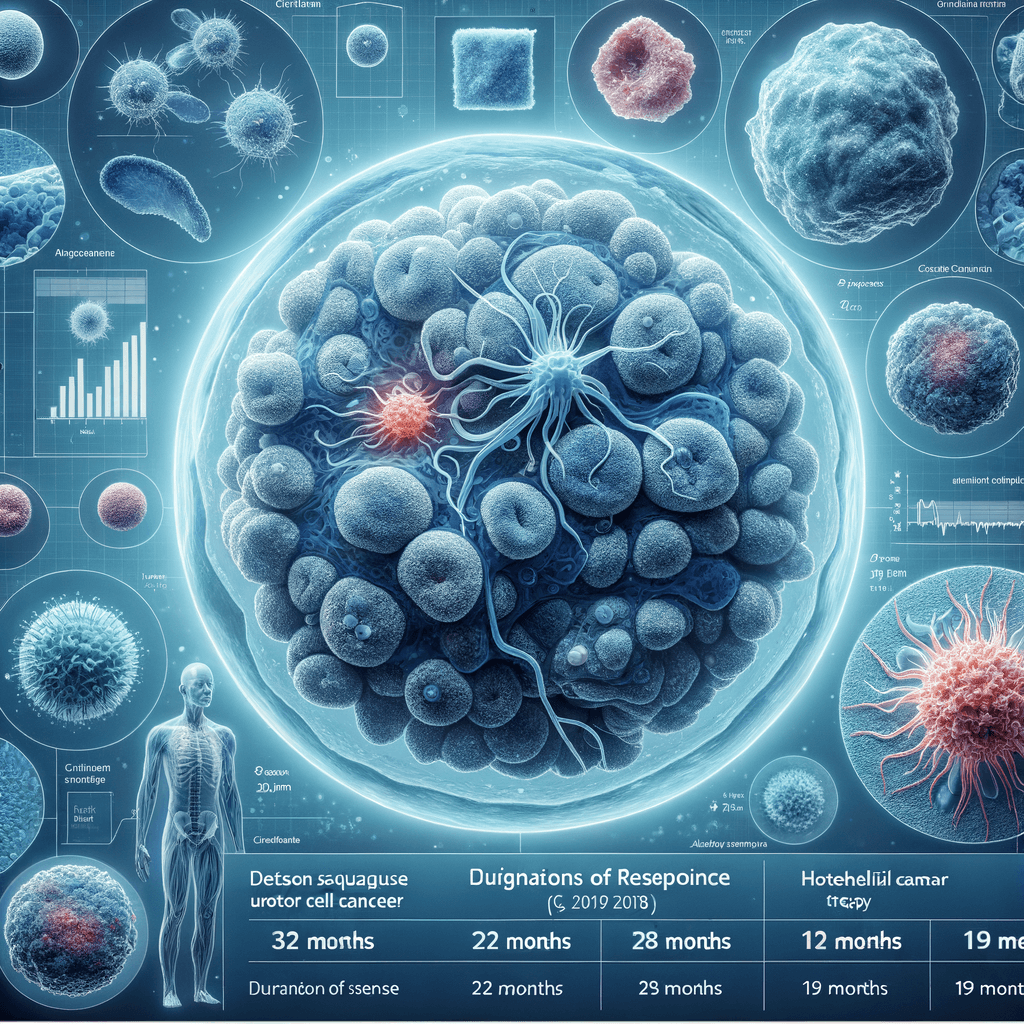
CatalYm announced updated long-term data from its GDFATHER-1/2a trial at ESMO Congress 2025, showcasing the potential of visugromab to reverse resistance to PD-(L)1 treatment in patients with advanced solid tumors. The data demonstrated durable responses in patients who had relapsed or progressed on prior checkpoint inhibitor treatment, with median duration of response exceeding 32 months in non-squamous NSCLC, 28 months in urothelial cancer, and 19 months in hepatocellular carcinoma. Visugromab, a monoclonal antibody neutralizing GDF-15, also mitigated cachexia in affected patients and was well-tolerated in combination with nivolumab.
Key Highlights
- Visugromab shows durable responses in CPI-refractory tumors, with median duration exceeding 32 months in non-squamous NSCLC, 28 months in urothelial cancer and 19 months in hepatocellular carcinoma.
- GDF-15 blockade re-sensitizes tumors to immunotherapy and demonstrates favorable safety and tolerability.
- Visugromab mitigated cachexia in affected patients, indicating a dual benefit in tumor control and weight gain.
- Responses to visugromab plus nivolumab exceeded and deepened those of prior checkpoint inhibitor treatment in a majority of responders.
Emerging Mechanisms of Action for Solid Tumors
Recent publications highlight several innovative mechanisms of action emerging for solid tumor treatment:
Molecular Targeting Approaches
Epigenetic modifications are gaining prominence, with N6-methyladenosine (m6A) being the most abundant RNA modification playing important roles in various cancers. Histone methylation is another important target, with lysine demethylases influencing oncogenic pathways and drug resistance by modulating cancer cell metabolism.
RET inhibitors represent a major therapeutic target as RET alterations occur in nearly 2% of all cancers. Six inhibitors have been approved, with recent approvals focusing on selective RET inhibitors rather than multikinase inhibitors.
Mitochondrial-Based Strategies
Mitochondrial inhibition is emerging as a viable strategy for eradicating cancer stem cells, which show high chemo- and radioresistance. Recent approaches include: - Dextran-based nano-assemblies that target mitochondria and deplete glutathione (GSH) to enhance photodynamic therapy - "Vehicles" capable of transporting pharmacophores to mitochondrial tumor cells - Combined approaches targeting mitophagy, fusion, and fission of mitochondria
Novel Therapeutic Modalities
Metallodrugs show promise as alternatives to platinum-based medicines, including ruthenium, gold, copper, iridium, and osmium complexes effective against many cancer cell lines with less toxicity.
Photodynamic therapy (PDT) offers promising treatment against glioblastoma multiforme (GBM) cells, with β-galactosidase (β-gal) activatable phototheranostic agents being developed.
Gold nanoparticles (AuNPs) with photothermal properties are being developed for thermal ablation of tumors, showing significant inhibition effects both in vitro and in vivo.
Targeting Tumor Microenvironment
Tumor-associated macrophages (TAMs) are being targeted through three main approaches: - Reprogramming TAMs toward anti-tumor function - Blockade of recruitment - Reduction/ablation of TAMs
Imaging mass cytometry (IMC) with a panel of 31 markers enables spatially resolved analyses of intra-tumor heterogeneity at the single-cell level.
Cell Death Pathways
Pyroptosis-related genes (PRGs) are being studied as potential targets in skin cutaneous melanoma, with eight specific PRGs identified: AIM2, CASP3, GSDMA, GSDMC, GSDMD, IL18, NLRP3, and NOD2.
Autophagy modulation shows promise, with inhibitors like UAMC-2526 demonstrating beneficial effects when combined with gemcitabine in pancreatic ductal adenocarcinoma. Conversely, core-shell nanoinducers that trigger excessive autophagy using near-infrared light have shown remarkable efficacy in inhibiting tumor growth.
Drug Repurposing
Anthelmintic benzimidazoles (albendazole, mebendazole, flubendazole) are being repurposed for their anticancer potential due to their effects on microtubules and oncogenic signaling pathways.
Calycosin, a phytoestrogen from traditional Chinese medicine, has demonstrated inhibitory effects against various cancers by reducing tumor cell proliferation, inducing apoptosis, and suppressing migration and invasion.
Key Endpoints Emerging for Solid Tumors
Recent publications highlight several emerging endpoints for solid tumor evaluation and treatment. These can be categorized into several key areas:
Biomarkers and Prognostic Indicators
The tumor microenvironment (TME) and tumor immune infiltration significantly impact pancreatic adenocarcinoma progression and prognosis. CXCL10 has emerged as a predictive biomarker negatively correlating with prognosis in pancreatic cancer. The Ki67 proliferation marker shows substantial prognostic potential in breast cancer, with hot spot scoring demonstrating greater value for recurrence-free survival and global scoring for overall survival. Tumor size significantly impacts prognosis in thymic epithelial tumors, affecting both relapse-free survival and overall survival.
Immunotherapy Endpoints
PD-L1 expression serves as a companion diagnostic for checkpoint inhibitor therapy, with tumor proportion scores (TPS) guiding treatment decisions. High tumor mutational burden predicts immunotherapy response in advanced basal and cutaneous squamous cell cancers. CD8 T-cell infiltration has become an important endpoint for evaluating immune response. Recent research shows high PD-1 expression on CD8+ T cells is associated with worse survival outcomes.
Precision Medicine Approaches
Genomic/transcriptomic analysis enhances diagnosis and prognosis determination in melanocytic neoplasms. Gene expression profiling identifies high-risk individuals for metastases in cutaneous squamous cell carcinoma. Targeted therapy selection based on specific genetic alterations includes Hedgehog inhibitors for basal cell carcinomas with SMO or PTCH1 gene alterations and mTOR signaling inhibitors for tumors with TSC1/TSC2 gene alterations.
Novel Detection Methods
Surface-enhanced Raman scattering (SERS) with nuclear-targeting nanoprobes detects biochemical changes in cancer cell nuclei. Digital image analysis (DIA) platforms improve biomarker assessment reproducibility, while automated scoring systems provide more objective evaluation of biomarkers like PD-L1.
Clinical Trial Endpoints
Overall survival (OS) remains a primary endpoint in multiple trials, including CheckMate 9LA. Complete response (CR) rate is used in trials like ASTRA and NIVAHL. Disease control rate (DCR) was utilized in trials evaluating treatments for breast cancer brain metastases. Pathological response rates and objective response rate were assessed in the toripalimab NSCLC study. Tumor growth inhibition value (TGI) has emerged as a surrogate endpoint for assessing antitumor activity.
Novel Biological Endpoints
Pyroptosis, a lytic cell death form executed by gasdermins proteins, has been identified as a potential endpoint for treatment efficacy. GSDME-mediated pyroptosis specifically serves as a marker for treatment response. Reactive oxygen species (ROS) accumulation has been utilized as a marker for treatment efficacy in combination therapies. T1 relaxivity in MRI and fluorescence activation have been developed as surrogate endpoints for tumor-targeting nanoparticle delivery and drug activation in hypoxic environments.
Drugs with the Same Mechanism of Action as Nivolumab
Based on the provided context, there are several immune checkpoint inhibitors that share the same mechanism of action as Nivolumab, which is a fully human monoclonal antibody against programmed death receptor-1 (PD-1). However, there is no information available about Visugromab in the context, making it impossible to identify drugs that share mechanisms with both Visugromab and Nivolumab.
Other PD-1/PD-L1 Inhibitors
The following drugs share the same or similar mechanism of action as Nivolumab:
-
PD-1 Inhibitors:
-
Pembrolizumab - Used for treatment of cisplatin-ineligible patients with transitional cell cancer
-
Cemiplimab - Mentioned in ocular adverse events study
-
Sintilimab - Studied in esophageal squamous cell carcinoma
-
Camrelizumab - Studied in esophageal squamous cell carcinoma
-
Toripalimab - Studied in esophageal squamous cell carcinoma
-
PD-L1 Inhibitors (related but slightly different target):
-
Atezolizumab - Approved for cisplatin-ineligible patients with transitional cell cancer
-
Avelumab - Mentioned in ocular adverse events study
-
Durvalumab - Mentioned in ocular adverse events study
Intervention Models for Clinical Trials
These immune checkpoint inhibitors are being studied using various intervention models:
- Randomized, double-blind, phase 3 trials - Such as CheckMate 238 comparing nivolumab versus ipilimumab
- Non-comparative, open-label, phase II trials - Used for nivolumab in Japanese patients with melanoma
-
Combination therapy models including:
-
Nivolumab plus ipilimumab (anti-CTLA-4)
-
Nivolumab plus cabozantinib (a multikinase blocker)
-
Pembrolizumab plus axitinib (VEGFR and PDGFR blocker)
-
Pembrolizumab plus lenvatinib (multikinase inhibitor)
-
Nivolumab plus sitravatinib
-
Atezolizumab plus bevacizumab
-
Azacitidine plus nivolumab (for AML)
- Monotherapy models - Single-agent trials of various checkpoint inhibitors
- Multicenter phase II studies - Used for nivolumab in cancer of unknown primary
- Bayesian approach trials - Used in nivolumab study for glioblastoma
These drugs are being investigated for multiple indications including melanoma, renal cell carcinoma, urothelial carcinoma, glioblastoma, cancer of unknown primary, esophageal squamous cell carcinoma, and pituitary tumors.
Clinical trials for these PD-1/PD-L1 inhibitors include phase 1, phase 2, and phase 3 trials, with many studies comparing monotherapy versus combination therapy approaches to determine optimal treatment strategies.
Contact Us
Address
One Research Ct, Suite 450
Rockville, MD 20850
For General Inquiry
info@pienomial.com